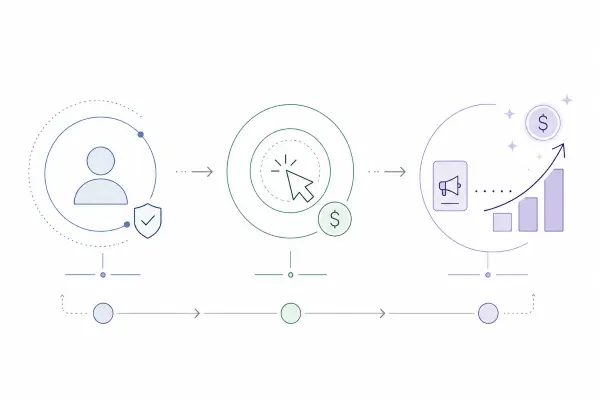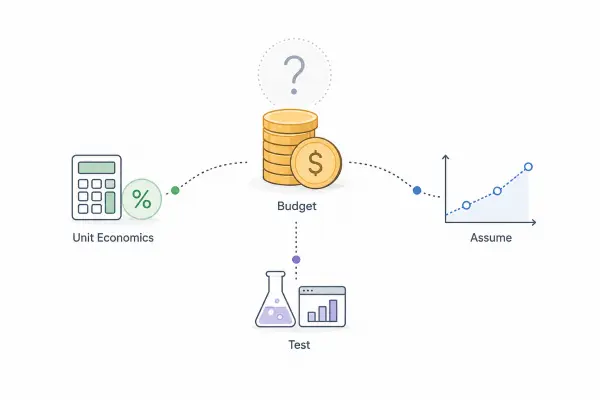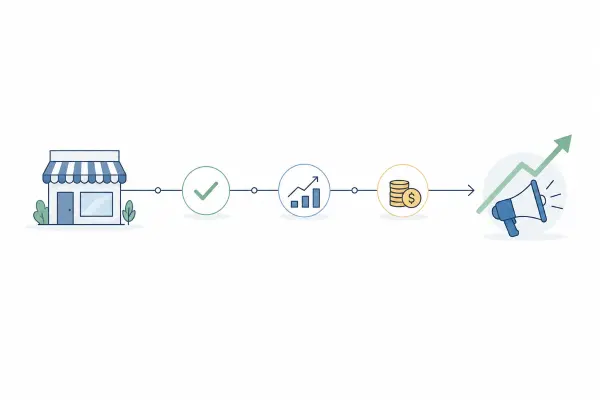
Performance marketing should not begin only because a business wants faster growth. Paid campaigns amplify demand, but also expose weak offers and funnels. Start when the business can measure results, convert demand, and fund a meaningful test. Performance marketing readiness matters more than company age. In this blog post I am going to explain When Should a Business Start Performance Marketing?
What Must Be in Place Before Performance Marketing Can Work?
Advertising cannot replace a clear value proposition, functional funnel, or capable sales process.
Review your offer, audience, funnel, measurement, and financial limits before deciding when to invest in performance marketing.
A Validated Product or Offer
A validated offer has produced sales, qualified leads, trials, demos, or repeat purchases.
If customers do not understand the offer organically, improve its positioning, pricing, or product-market fit before increasing traffic.
A Defined Audience and Measurable Conversion
Know the target customer, the problem you solve, and the action that creates value. This action might be a purchase, consultation, qualified lead, or product activation.
Without a clear outcome, advertising platforms may optimize for cheap but low-quality activity instead of meaningful business results.
A Website or Sales Process That Can Convert Demand
Your landing page should explain the offer quickly, load reliably, work properly on mobile devices, and provide a clear call to action.
For lead-generation businesses, slow follow-up or weak qualification can make an effective campaign appear unprofitable.
Signs Your Business Is Ready for Performance Marketing
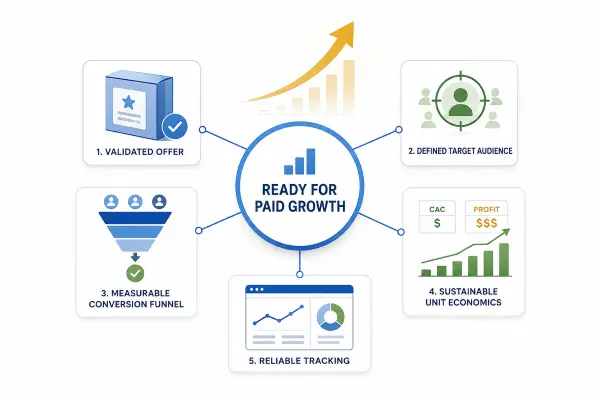
These signs help answer the question, “Is performance marketing right for my business?” Serious gaps in these areas can make customer acquisition unnecessarily expensive.
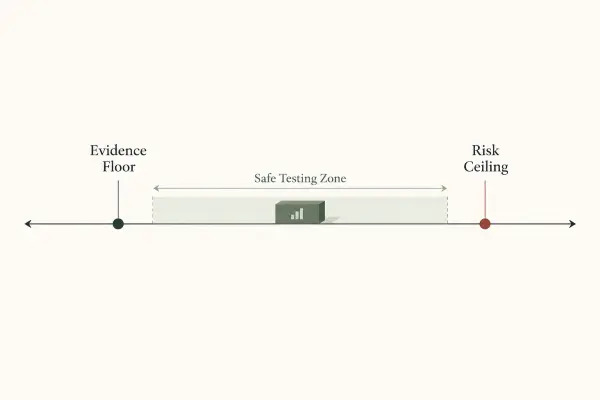
Stronger evidence supports a safer move from controlled testing to scalable acquisition.
Customers Already Show Evidence of Demand
Demand may appear through organic sales, referrals, branded searches, demo requests, or repeated customer questions.
An ecommerce brand might test Shopping ads after generating regular organic sales, while a local service business might use search ads to capture existing demand.
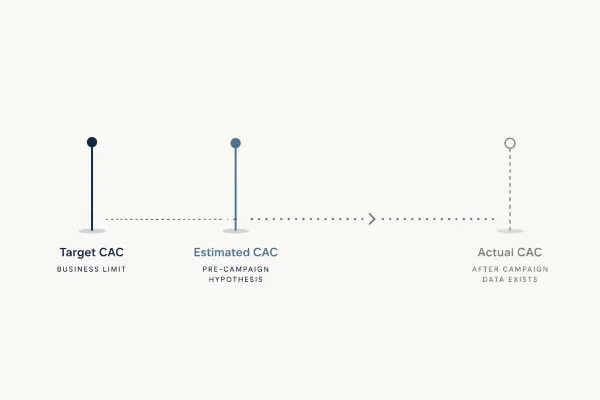
You Know Your Acceptable CAC and Break-Even ROAS
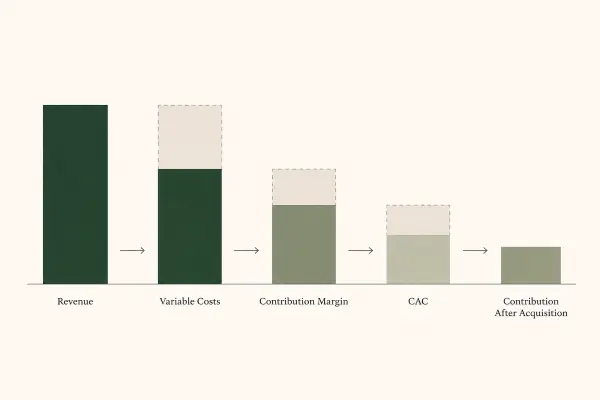
Your acceptable customer acquisition cost should reflect gross margin, fulfilment expenses, sales costs, retention, and customer lifetime value.
Ecommerce teams may use break-even ROAS, while SaaS companies may compare CAC with expected lifetime gross profit.
Your Conversion Tracking Is Reliable
Record purchases, leads, calls, meetings, and qualified opportunities consistently across advertising platforms, analytics tools, and your CRM.
Tracking does not need to be perfect, but it must distinguish valuable outcomes from weak ones. Otherwise, campaigns may optimize toward the wrong behaviour.
You Have a Dedicated Test Budget
A test budget should generate useful learning without threatening essential operations. A few days of very limited spending rarely support a fair decision.
Define the maximum acceptable loss, test duration, and decision criteria before launching the campaign.
Your Team Can Handle More Leads or Orders
Campaign success can damage customer experience when inventory, fulfilment, onboarding, sales, or support cannot absorb additional demand.
Before scaling, understand your lead-handling, stock, fulfilment, and customer-support limits.
At Least One Channel Matches Customer Behaviour
Search advertising captures active demand, while paid social, video, and display advertising can support discovery and retargeting.
My guide to what Google Ads is explains this demand-capture channel in more detail. Start with the channel where customer intent is strongest and results can be measured reliably.
When Should a Business Wait Before Starting?
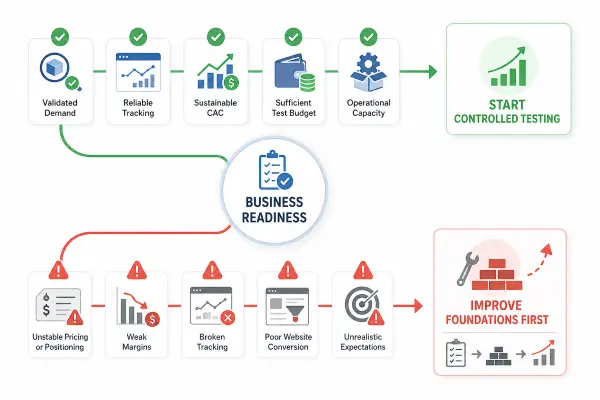
Knowing when to avoid performance marketing is as important as knowing when to start. Delaying investment can be the responsible choice when business foundations remain unstable.
Waiting does not mean abandoning growth. Use that time to strengthen your offer, funnel, economics, or tracking so future experiments produce clearer results.
The Product, Positioning, or Pricing Is Still Changing
Frequent changes make campaign results difficult to interpret. You cannot determine whether performance changed because of advertising or because the underlying offer changed.
Use customer interviews, direct sales, or organic experiments to stabilize the proposition. Begin paid testing once the core offer can remain consistent during the evaluation period.
Margins Cannot Support Customer Acquisition Costs
Low margins leave limited room for advertising, fulfilment, payment fees, returns, sales commissions, and overhead. Even efficient campaigns may fail to create profit.
Improve pricing, contribution margin, retention, bundles, or average order value first. Performance marketing for small businesses must protect cash flow, not only increase revenue.
The Website or Tracking Setup Is Unreliable
Broken forms, unclear pages, missing conversion events, or inconsistent CRM records prevent accurate optimization. Additional traffic usually magnifies these problems.
Audit the entire journey from the first click to the final sale. Test forms, checkout pages, call tracking, analytics events, and lead handoffs before committing a substantial budget.
The Business Expects Immediate Profitability
New campaigns require a learning period. Audiences, bids, creatives, landing pages, and offers often need several iterations before performance becomes stable.
Set expectations around controlled testing rather than immediate returns. Judging a campaign after only a few clicks encourages weak and potentially expensive decisions.
Does the Right Starting Time Depend on the Business Model?
The principles of performance marketing readiness remain similar, but conversion events, attribution windows, channels, and test durations differ. A direct purchase should not be measured like an enterprise sales opportunity.
Adapt the measurement plan to your business model without ignoring the foundations. Every company still needs a clear offer, sustainable unit economics, and trustworthy data.
Ecommerce and Transactional Businesses
Ecommerce businesses can usually measure revenue quickly, but they must include margins, refunds, shipping, discounts, and repeat purchases in their calculations.
Start when the store converts reasonably well and product demand is visible. Do not scale based on platform ROAS alone if contribution profit remains weak.
SaaS and Long-Sales-Cycle B2B Companies
SaaS and B2B campaigns should measure qualified demos, activated trials, sales opportunities, or pipeline value. Lead volume alone rarely represents commercial success.
These companies need CRM integration and longer evaluation windows. Performance may be positive before revenue appears if lead quality and pipeline progression are improving.
Local Businesses and Early-Stage Startups
Local businesses can test tightly targeted campaigns when their profitable services, locations, call-handling process, and appointment capacity are clear.
Should a startup use performance marketing? Yes, but mainly as a focused validation tool. Early-stage teams should protect cash and test one important assumption at a time.
How to Start Performance Marketing Without Wasting Budget
A disciplined launch requires a narrow objective, a suitable channel, and predetermined decision rules. Add complexity only after the first campaign produces dependable learning.
For a broader planning framework, read my complete guide to creating a performance marketing strategy. Businesses that need hands-on support can also review my performance marketing service.
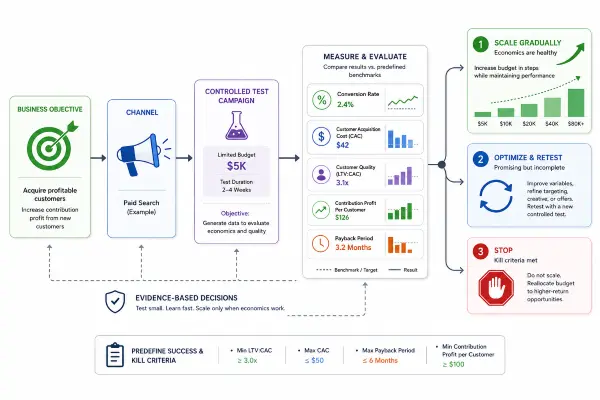
Choose One Objective and One Primary Channel
Choose one commercially meaningful objective, such as profitable purchases, qualified consultations, or activated trials. Avoid combining awareness, lead generation, and sales into one unclear campaign.
Select the channel that best matches customer behaviour. Focused learning usually creates more value than dividing a limited budget across several platforms.
Define KPIs, Kill Criteria, and Scaling Criteria
Select your indicators before launch. These may include cost per qualified lead, conversion rate, CAC, contribution profit, pipeline value, or payback period.
Also define when the campaign should stop, change, or scale. Clear rules reduce emotional decisions and prevent weak campaigns from continuing because money has already been spent.
Run a Controlled Test Before Increasing Spend
Keep targeting, the offer, and measurement stable long enough to understand performance. Connect every test to a clear hypothesis.
Increase spending gradually after conversion quality and unit economics remain consistent. Scaling too quickly can change the audience composition and reduce efficiency.
Performance Marketing Readiness Checklist
Use this performance marketing readiness checklist before launching. One negative answer may not prevent testing, but several negative answers suggest that the business needs stronger foundations.
Your business is closer to readiness when it can answer yes to most of these questions:
- Is the offer validated?
- Is customer demand visible?
- Is the target audience defined?
- Is the conversion action measurable?
- Is conversion tracking reliable?
- Are the unit economics sustainable?
- Is there a dedicated test budget?
- Can the business serve more customers?
Frequently Asked Questions
The right starting point depends less on company size than on available evidence. Small businesses can perform well when their economics, audience, and conversion funnel are clear.
These answers summarize when performance marketing works best and what should be prepared before launching.
Can a Startup Begin Performance Marketing?
Yes. A startup can test demand, messaging, or acquisition channels when it defines a narrow hypothesis and a strict spending limit.
It should not treat early results as proof of unlimited scalability. Testing supports learning, while scaling requires repeatable customer quality and sustainable unit economics.
How Much Budget Is Needed to Start?
There is no universal minimum budget. Required spending depends on channel costs, conversion rates, geographic scope, sales-cycle length, and the amount of data needed to make a decision.
Estimate the budget using expected CPC or CPM, funnel conversion rates, and acceptable CAC. It should be large enough to generate evidence but small enough to remain financially responsible.
Should a Business Build Its Brand First?
A company does not need widespread brand awareness before testing performance marketing. It does need a credible identity, a clear promise, and enough trust to encourage customers to act.
Brand and performance marketing should reinforce each other. Brand strength improves campaign response, while performance data reveals which audiences and messages generate measurable demand.
Conclusion
The answer to “When should a business start performance marketing?” is determined by validated demand, measurement capability, sustainable unit economics, operational capacity, and disciplined testing.
For more practical guidance about digital marketing and business growth, visit Amin Farahani.