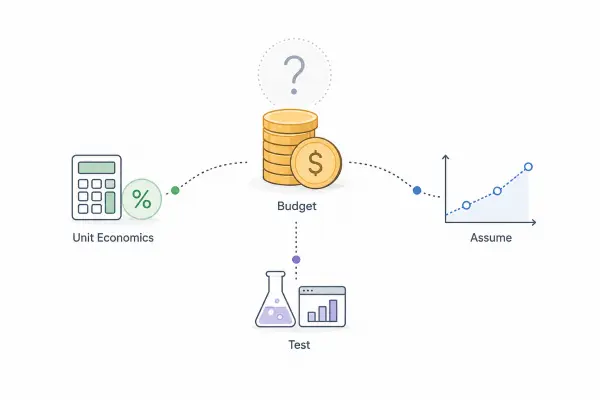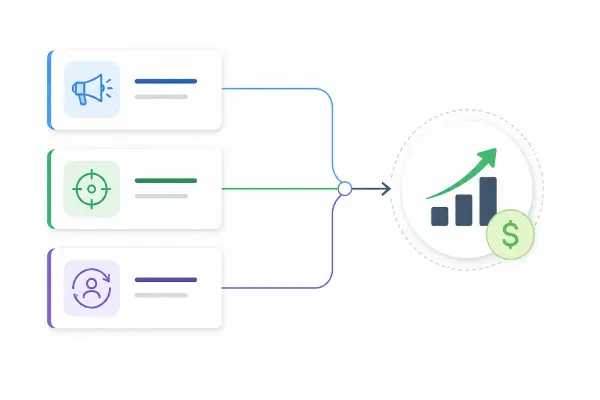
Learning how to create a paid media channel mix is not about advertising everywhere. It is a coordinated system in which each channel has a defined role, budget, message, and measurement method.
The goal is to combine demand generation, demand capture, and conversion support without spreading the budget too thinly. This framework covers selection, testing, allocation, and improvement.
What Is a Paid Media Channel Mix?
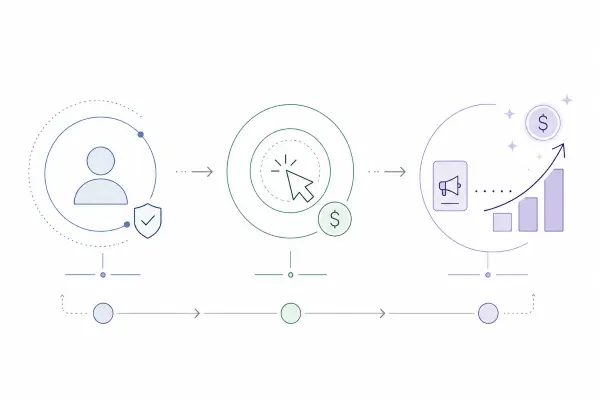
A paid media channel mix is the planned combination of channels used across the customer journey. Paid social may create awareness, search may capture demand, and retargeting may bring prospects back.
Every channel should solve a specific problem and support the wider performance marketing strategy, rather than being added because competitors use it.
Channel, Platform, and Tactic Are Different
A channel is a broad method, such as paid search. A platform is where the media is purchased, such as Google Ads or Microsoft Advertising.
A tactic is the execution inside that platform, such as branded search, Shopping, prospecting, or remarketing. Separating these levels makes planning and performance diagnosis clearer.
Step 1: Define the Objective and Economic Limits
Begin with the business outcome. Awareness, qualified pipeline, new customers, subscriptions, and repeat sales require different channel roles and metrics.
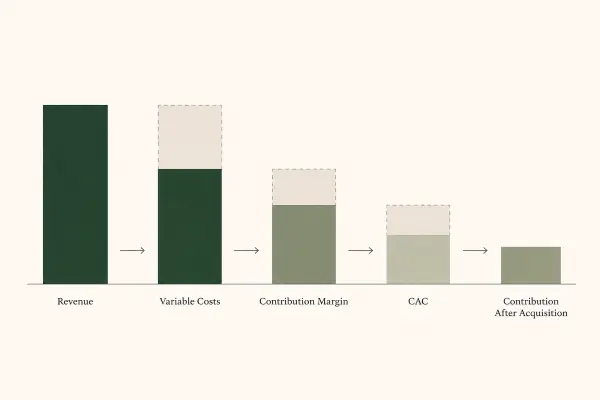
The paid media mix strategy must also reflect the business model. A high-margin subscription company can accept a different CAC and payback period from a low-margin retailer.
Choose One Outcome and Set Guardrails
Select one primary commercial outcome. For ecommerce, this may be new-customer contribution margin; for B2B, it may be sales-qualified pipeline rather than inexpensive form submissions.
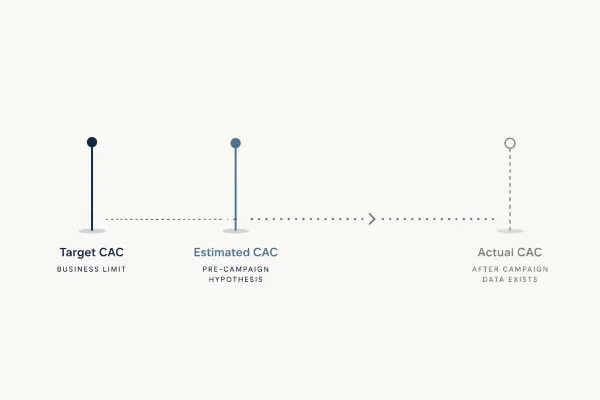
Set a maximum CAC, minimum ROAS, and target payback period before scaling. These guardrails should reflect margin, repeat purchases, close rate, and cash flow. Different channel roles may require different targets.
Step 2: Map Channels to the Customer Journey
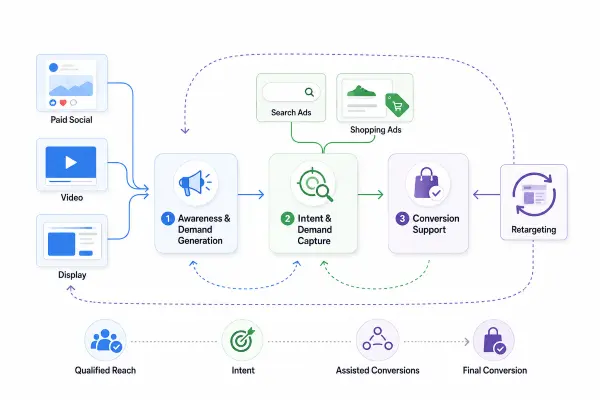
A full-funnel paid media strategy works because channels influence customers at different moments. Someone discovering a problem on LinkedIn is not in the same state of mind as someone searching Google for a solution.
Mapping channel roles prevents unfair comparisons with branded search. Judge whether the overall mix creates demand, captures intent, and moves prospects forward.
Balance Demand Generation and Demand Capture
Paid social, video, display, and native advertising can shape preferences before active research. Measure them through qualified reach, assisted conversions, branded demand, and incremental outcomes.
Paid search, Shopping, marketplaces, and high-intent affiliates capture existing demand. Search is especially useful when customers understand their need. Read What Is Google Ads in Digital Marketing? for more context.
Use Retargeting to Continue the Journey
Retargeting should continue the conversation, not repeat the same advertisement. A video viewer may need education, while a product-page visitor may need proof or reassurance.
Coordinate exclusions, audience windows, and frequency caps across channels. Otherwise, platforms may repeatedly target the same audience, claim the same conversions, and create an illusion of scale.
Step 3: Score and Select Paid Media Channels
The best channel is not simply the one with the lowest CPC. Paid media channel selection should consider audience fit, intent, expected economics, creative requirements, scalability, measurability, and operational difficulty.
Start with a shortlist and a consistent channel selection framework. This reduces decisions based on preference or platform hype.
Build a Paid Media Channel Scorecard
Score each candidate from one to five on the factors above, then weight the criteria that matter most. A B2B company may prioritise professional audience access, while an ecommerce brand may value visual creative fit and transaction volume.
For smaller budgets, two or three properly funded channels are usually more useful than six weak experiments. A practical mix includes one proven channel, one growth channel, and one experimental channel, each with a written role.
Step 4: Allocate Budget Across the Mix
Paid media budget allocation should protect current performance while creating room for growth. Putting everything into the strongest last-click channel may improve short-term reporting while reducing future demand.
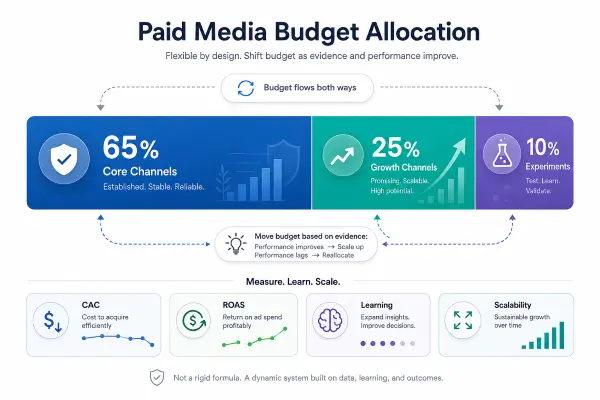
Your paid media budget mix should fund delivery and learning. Allocation should change as evidence improves, not remain fixed.
Separate Core, Growth, and Experimental Spend
A useful starting point is 65% for core channels, 25% for growth channels, and 10% for experiments. Core channels have repeatable economics, growth channels show promise, and experimental spend tests new platforms or audiences.
Treat this as a baseline, not a universal formula. A mature advertiser may explore more, while a cash-constrained company may need a larger core allocation and stricter channel kill criteria.
Fund Tests to Produce a Decision
A channel experiment needs enough budget and time to create useful learning. Estimate the paid media test budget from expected CPC or CPM, conversion rate, target CAC, sales-cycle length, and required conversion volume.
Avoid splitting a small budget across too many audiences and platforms. A minimum viable channel test should answer one clear question, such as whether a defined audience can produce qualified customers within an acceptable cost range.
Step 5: Connect the Channels Into One Journey
A multi-channel paid media strategy is not several isolated campaigns. Customers move between platforms, content, and landing pages, so the message should develop as intent changes.
Paid media can also amplify owned content. Articles, guides, case studies, webinars, and videos may generate content-assisted conversions even when they do not receive the final-click credit.
Match the Message to the Channel’s Role
Awareness creative should earn attention and explain the problem. Consideration creative should provide proof, differentiation, or comparisons. Conversion creative should reduce risk and make the next action clear.
A campaign idea can be adapted across platforms, but it should not be copied blindly. Search responds to expressed intent, whereas paid social often needs to establish relevance first.
Step 6: Measure and Improve the Channel Mix
Platform dashboards help manage campaigns, but they are not a neutral view of the mix. Multiple platforms may claim the same sale.
Measure paid media channel performance with business data as well as platform data. Combine CTR, CPC, and ROAS by channel with blended CAC, contribution margin, qualified pipeline, payback, retention, and customer quality.
Combine Attribution, Incrementality, and Marginal Returns
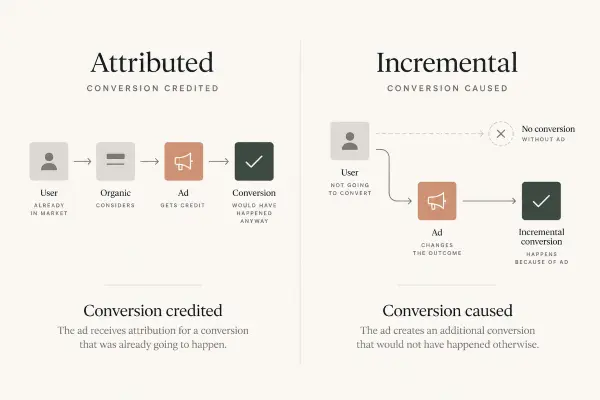
Cross-channel attribution describes recorded touchpoints, while paid media incrementality testing estimates what happened because of advertising. Together, they provide a better view than last-click reporting alone.
Media mix modelling can support mature advertisers with sufficient historical data. Smaller teams can use blended performance, holdout tests, and geographic experiments.
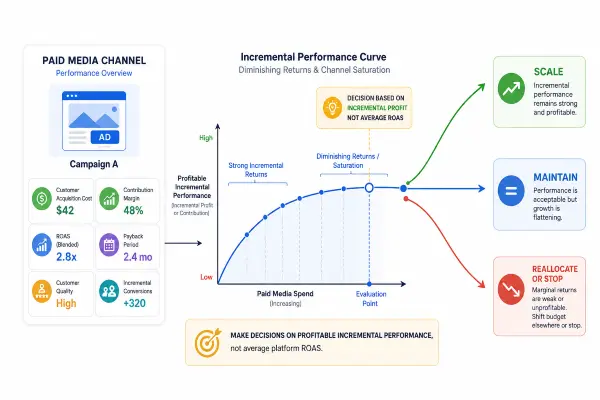
Monitor marginal ROAS as spend rises. Average ROAS can remain acceptable while each additional unit of budget produces less value. When marginal return weakens, reallocate budget instead of scaling into channel saturation.
When to Scale, Maintain, or Stop a Channel
Scale when a channel meets its economic guardrails, attracts acceptable customers, and maintains performance as spend increases. Raise the budget gradually so you can identify diminishing returns.
Maintain a channel when it supports the journey but has limited extra reach. Stop or redesign it when a properly funded test misses targets after checking tracking, creative, targeting, landing pages, and offer quality.
Example of a Simple Paid Media Channel Mix
An ecommerce brand could allocate 45% to paid social for demand generation, 35% to paid search and Shopping for demand capture, 10% to retargeting, and 10% to an experiment.
Paid social could use new-customer CAC; search could use contribution margin and non-brand ROAS; retargeting could use incremental lift; and the experiment could use a predefined learning objective.
Common Paid Media Mix Mistakes
Common mistakes include selecting platforms before objectives, using the same KPI everywhere, and trusting platform-reported ROAS completely. Copying a competitor’s mix is also risky because its economics differ.
Teams also test too many channels with insufficient budget, allow retargeting to claim excessive credit, and scale average ROAS without checking marginal returns. Good planning prevents these problems before optimisation begins.
Frequently Asked Questions
Most smaller advertisers should begin with two or three complementary channels. This provides useful funnel coverage without weakening every campaign through insufficient budget.
Review the mix regularly, but do not rebuild it after every fluctuation. Add a channel when the current mix is measurable, the team can support its creative requirements, and a clear funnel gap remains.
Which Paid Media Channel Should You Test First?
Begin with the channel that combines strong audience fit, measurable intent, realistic economics, and manageable execution. Existing search demand often makes paid search a logical starting point.
When the market has low awareness or limited search volume, paid social or video may be needed first to create demand. More resources are available on aminfarahani.com.
Final Thoughts
The strongest paid media channel mix is not the one with the most platforms. It is the smallest coordinated system capable of creating demand, capturing intent, supporting conversion, and producing measurable value.
Build around clear channel roles, fund every test properly, and move budget according to incremental and marginal performance. That is how paid media becomes a scalable growth system rather than disconnected campaigns.