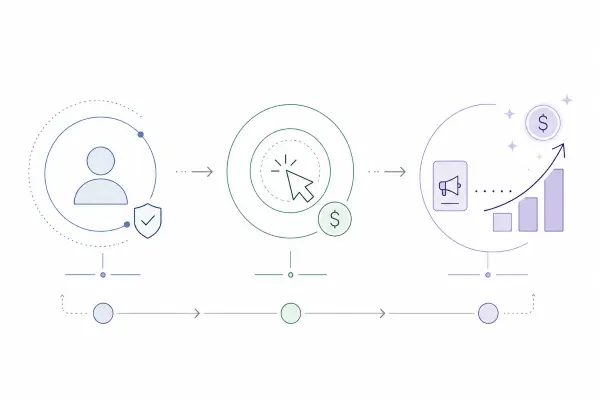
Digital marketing(If you don’t know about it just read my simple guide about what is digital marketing) produces a large amount of data every day. Clicks, views, visits, likes, conversions, and revenue numbers are constantly available across different platforms. Without a clear way to evaluate this data, businesses often feel busy but uncertain about whether their efforts are actually successful. This is where KPIs (key performance indicator) become essential.
These indicators provide focus and direction in digital sterategy. They help businesses understand whether marketing activities are contributing to real goals instead of just generating activity. For beginners, KPIs may sound technical, but in reality, they are simply tools for clarity and better decision-making.
Why Measuring Digital Marketing Without KPIs Fails
When digital marketing is measured without key performance indicators, teams often rely on surface-level indicators such as traffic or impressions. While these numbers may look impressive, they do not necessarily reflect progress toward business objectives. This creates a false sense of success and makes it difficult to improve performance.
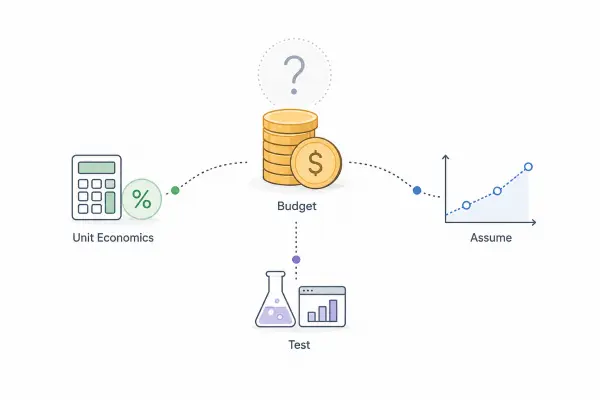
Without KPIs, marketing decisions become reactive. Budgets are adjusted based on assumptions, not evidence. Over time, this lack of structure leads to wasted resources and inconsistent growth.
What Is KPI in Digital Marketing?
To use KPIs effectively, it is important to understand what they truly represent and how they differ from general metrics.
A KPI, or Key Performance Indicator, in digital marketing is a specific measurement used to evaluate how well marketing efforts are achieving defined goals. Unlike general metrics, These indicators are chosen intentionally because they reflect progress toward outcomes that matter to the business.
For beginners, the key idea is priority. KPIs highlight what deserves attention and what can be ignored. They answer the question of whether marketing is moving the business forward.
KPI vs Metrics – Understanding the Difference
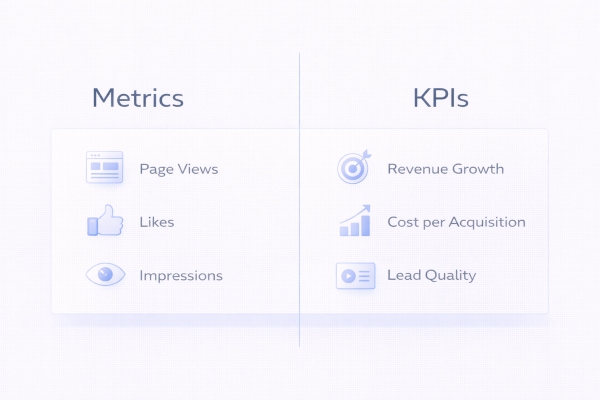
Metrics are any measurable data points, such as page views or email opens. KPIs are selected metrics that directly relate to objectives. Every KPI is a metric, but not every metric is a KPI.
Confusing metrics with KPIs often leads to tracking too much data without insight. When businesses focus on the right metrics, they reduce noise and gain clearer direction.
Why Performance Indicators Matter in Digital Marketing?
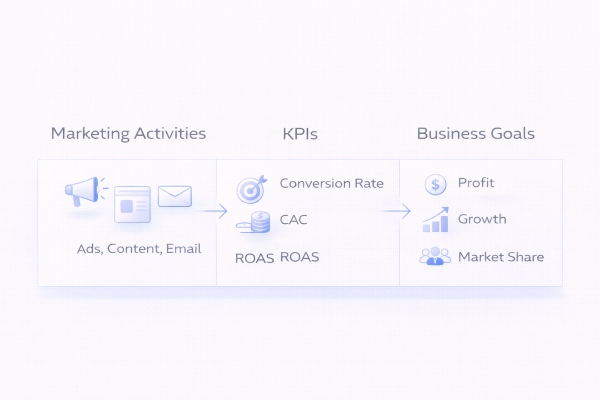
Key Performance Indicators connect marketing actions to meaningful outcomes. Without them, it is difficult to justify decisions or prove impact.
Connecting Marketing Activity to Business Goals
These metrics translate business goals into measurable signals. For example, if the goal is growth, KPIs might focus on lead quality or revenue contribution rather than traffic volume.
This connection ensures that marketing supports broader objectives instead of operating in isolation. It also improves alignment between marketing, sales, and leadership teams.
How key performance indicator Support Better Decision-Making
Right Indicator act as reference points for evaluating performance. When results fall short, These metrics help identify where adjustments are needed. When performance improves, KPIs show what should be scaled.
This feedback loop allows marketing strategies to evolve based on evidence rather than intuition.
How are they Work in Digital Marketing
They are most effective when chosen and reviewed thoughtfully.
Setting the Right KPIs Based on Objectives
The right Metrics depend on what a business is trying to achieve. Awareness-focused campaigns require different Metrics than conversion-driven campaigns. Choosing Indicators without clear objectives leads to confusion.
Effective KPI selection starts with defining goals and then identifying indicators that reflect progress toward those goals.
Short-Term vs Long-Term KPIs
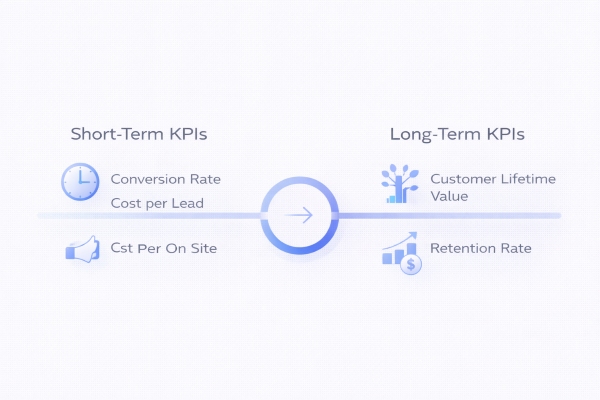
Some Indicators reflect immediate performance, such as conversion rate, while others indicate long-term impact, such as customer lifetime value (CLV). Both types are important, but they serve different purposes.
Balancing short-term and long-term KPIs prevents over-optimization and supports sustainable growth.
Types of KPIs in Digital Marketing
They can be grouped based on the stage of the marketing process they measure.
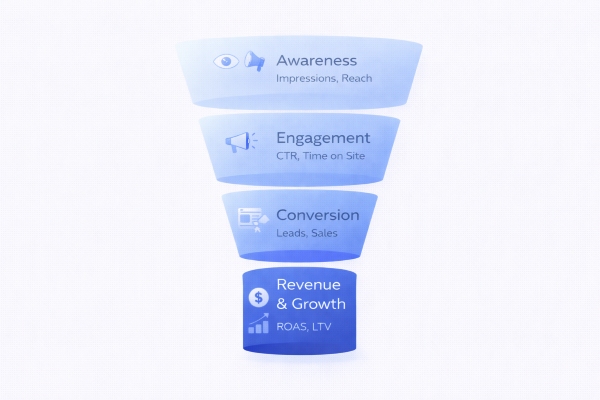
For Awareness
Awareness KPIs measure visibility and reach. Examples include impressions and reach. These Key Metrics are useful for understanding how many people are exposed to a brand.
However, awareness Key Performace Indicators alone do not indicate success. They should be paired with deeper indicators.
For Engagement
Engagement Indicators measure how users interact with content. Metrics such as time on site or click-through rate fall into this category.
These Indicators provide insight into relevance and interest, helping marketers refine messaging and content quality.
For Conversion
Conversion KPIs track actions that move users closer to business outcomes. These may include form submissions, sign-ups, or purchases.
Conversion Metrics are critical because they indicate whether marketing efforts are producing tangible results.
For Revenue and Growth
Revenue-focused KPIs measure financial impact. Examples include return on ad spend or customer acquisition cost.
These Indicators connect marketing directly to profitability and scalability.
But are these are the only indactors that we should measure ? or is this the only way to set our Performance Indicators ? I should say, Different channels require different Metrics focus, even when goals are similar.
For Content and SEO
Content and SEO KPIs often focus on engagement, organic traffic quality, and assisted conversions. These KPIs help evaluate long-term visibility and trust-building efforts.
Success in these channels is usually gradual and cumulative.
For Paid Advertising
Paid advertising Key Metrics focus on efficiency and return. Metrics such as cost per conversion and return on investment are commonly used.
They help determine whether campaigns should be scaled or optimized.
For Email and Lead Generation
Email and lead generation Metrics measure both engagement and conversion quality. Open rates, click rates, and lead-to-customer ratios provide insight into effectiveness.
They highlight the strength of relationships and nurturing efforts.
Common KPI Mistakes Businesses Make
Misusing These Metrics can be as harmful as not using them at all.
- Tracking Too Many of them
Tracking too many Metrics dilutes focus. Teams become overwhelmed and struggle to identify priorities. Limiting them to what truly matters improves clarity and action.
- Focusing on Vanity Metrics
Vanity metrics look impressive but offer little insight into business outcomes. Examples include follower counts without engagement. Relying on these metrics leads to misguided decisions.
- Choosing Without Strategy
Selecting Metrics without aligning them to goals results in irrelevant measurement. Key Performance Indicators should support strategy, not replace it. Clarity in strategy ensures meaningful measurement.
How to Choose the Right Key Metrics for Your Business
Early-stage businesses may prioritize awareness and engagement Metrics, while mature businesses focus more on revenue and retention. Understanding business context ensures appropriate Key metric selection.
Reviewing and Updating Indicators Over Time
As goals evolve, your metrics should be reviewed and updated. Stagnant Key metircs can limit growth and adaptation. Regular review keeps measurement relevant.
Why Tools and Dashboards Are Not Enough
Tools display data, but they do not define success. Without strategy, dashboards become collections of numbers with no direction. Strategy gives KPIs meaning and purpose. Of Course you can do it your self but working with some one or a team can help you reach your goal faster and safer.
When to Work with a Agency or a person
Experienced partners help identify the right KPIs and translate data into action. This guidance reduces trial and error and accelerates results. Professional support is especially valuable during growth phases. If you want to reach targets faster you can fill a form on my preformance marketing services page.
Final Thoughts
KPIs are not just numbers; they are guides that shape decisions and priorities. In digital marketing, where data is abundant, right metrics provide focus and clarity. When chosen strategically and reviewed consistently, Key indicators help businesses move from activity-based marketing to outcome-driven growth. For organizations serious about performance and scalability, they are an essential foundation for success. thank you for reading this guide, If you want to know more about Data-Drive Digital Marketing you can be with amin farahani‘s blog.