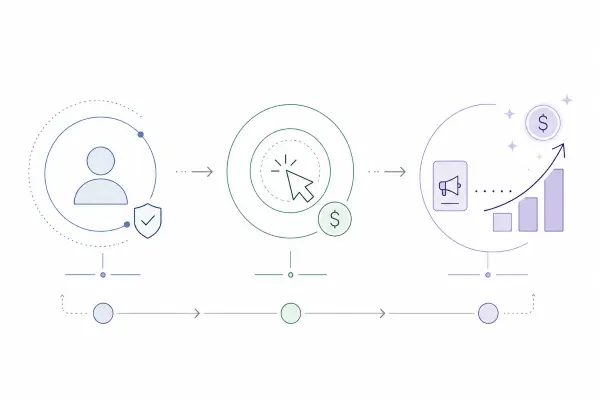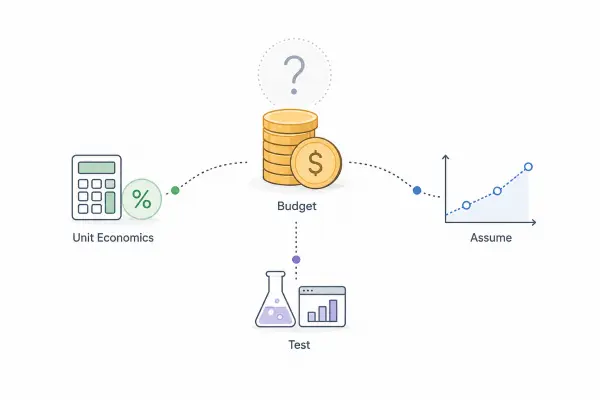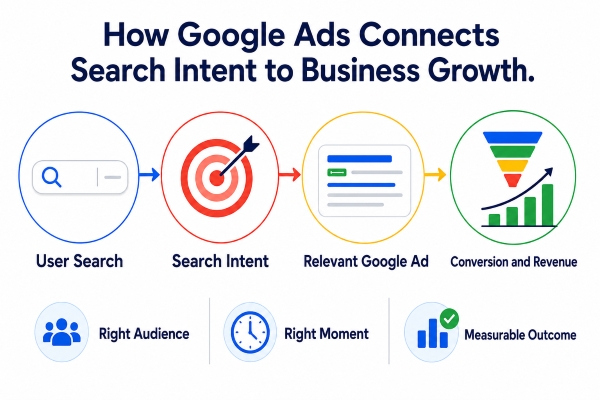
In digital marketing, visibility alone is not enough. Businesses need to appear in front of the right people at the exact moment those people are searching for solutions. This is where paid advertising plays a critical role(You can learn more about this concept in what is Search engine marketing article). While organic methods build long-term presence, paid channels provide speed, control, and predictability that many businesses need to grow.
Google Ads in digital marketing is one of the most widely used paid advertising platforms. It allows businesses to show ads across Google’s search results, websites, and other digital properties. For beginners, Google Ads may seem complex, but at its core, it is a system designed to connect user intent with relevant offers in a measurable way.
Why Paid Advertising Matters in Digital Marketing Today
The digital landscape has become increasingly competitive. Ranking organically takes time, and social media reach is often limited by algorithms. Paid advertising fills this gap by offering immediate access to audiences who are actively searching or browsing online.
Paid advertising also provides control that other channels lack. Businesses can choose who sees their ads, when they appear, and how much they spend. This flexibility makes paid advertising an essential part of modern digital marketing strategies such as Lead generation in digital marketing.
To use Google Ads effectively, it is important to understand what it represents within digital marketing rather than viewing it as just another tool.
What Google Ads Is and What It Is Not
Google Ads is not a guaranteed shortcut to success. Running ads without strategy, proper setup, or optimization often leads to wasted budget. It also does not automatically fix poor offers, weak messaging, or ineffective landing pages.
At the same time, Google Ads is not only for large companies with big budgets. When managed correctly, it can be scaled to suit small and medium-sized businesses by focusing on relevance and efficiency rather than volume.
How Google Ads Works (Only the Essentials)
Understanding the basic mechanics of Google Ads helps beginners avoid confusion and unrealistic expectations.
Keywords, Search Intent, and User Behavior
At the heart of Google Ads are keywords, which trigger ads based on user searches. However, success depends less on keywords themselves and more on understanding search intent. Users search with different goals, such as learning, comparing, or buying. Effective Google Ads strategies align keywords with intent. This ensures that ads appear when users are most likely to take meaningful action, not just when search volume is high.
Ad Auctions and Quality Score Explained Simply
Google Ads operates through an auction system that runs every time a search occurs. Advertisers bid for placement, but the highest bid does not always win. Google also evaluates ad relevance, expected performance, and user experience. This evaluation is reflected in a quality score. Higher relevance often leads to better placement at lower cost, which is why strategy and optimization matter more than budget alone. But remmember it does not mean you can put 1 dollar bid for 100 dollar keyword, In this situation you won’t get into the auction; no matter what is your quality score and how much you did optimision.
Types of Google Ads Campaigns
Google Ads offers several campaign types, each serving a different purpose within digital marketing.
Search Ads
Search ads appear directly in search results when users type specific queries. These ads are highly intent-driven and often used to capture demand from users ready to act. Because of this intent, search ads are commonly associated with strong conversion performance. You can put your target keywords in three types:
- Exact match:
- Google will show your ads only when a user’s search query exactly matches your target keyword or a very close variation of it. This match type is typically the most expensive because it targets highly relevant searches.
- Phrase match:
- Google will show your ads when a user’s search query includes your target keyword or has the same meaning. Phrase match helps you reach a wider audience while still targeting users with the same search intent as your keyword.
- Broad match:
- Google will show your ads when users search for terms related to your target keywords. For example, if your target keyword is “laptop price,” Google may show your ad for related searches, not just the exact keyword.
Display Ads
Display ads appear across websites, mobile apps, and other digital platforms within Google’s Display Network. They are primarily used to increase brand awareness and visibility rather than drive immediate conversions.
Their main strength is their ability to reach a broad audience and reinforce brand recognition, making them ideal for awareness campaigns rather than direct-response marketing.
Shopping Ads
Shopping ads showcase products with images, prices, and key details directly in search results. They are widely used by e-commerce businesses to attract users who are actively comparing products and ready to make a purchase.
By displaying essential product information upfront, Shopping ads help users make informed decisions and shorten the path from product discovery to purchase.
Video and Discovery Ads
Video and Discovery ads appear on platforms such as YouTube and Google’s discovery surfaces, including the Discover feed, Gmail, and the Home feed. They are highly effective for storytelling, building brand awareness, and engaging users early in the customer journey.
These ad formats help businesses strengthen brand recognition while also supporting performance-focused marketing objectives.
Google Ads in Digital Marketing Funnel
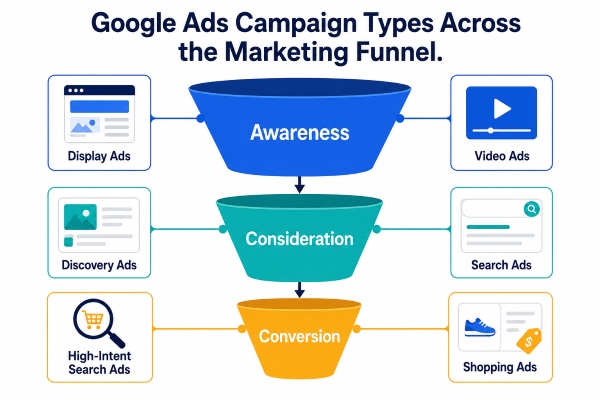
Google Ads can support different stages of the digital marketing funnel when used strategically because of this power, google ads medium is used alot in both growth and performance marketing teams(don’t know the difference? read what is the difference between growth marketing and performance marketing? blog post) . At the top of the funnel, display and video campaigns introduce brands to new audiences. In the middle, search and discovery campaigns support consideration by addressing specific needs or questions.
At the bottom of the funnel, high-intent search campaigns focus on conversion by targeting users ready to act. Matching campaign type to funnel stage improves efficiency and results.
Google Ads in Performance Marketing
One of the strongest advantages of Google Ads is its ability to capture high-intent users. When someone searches for a specific solution, they signal readiness and urgency.
Appearing at this moment increases the likelihood of conversion and makes it especially valuable for performance-driven strategies.
This chanel plays a central role in performance marketing because outcomes can be measured and optimized continuously.
Key Google Ads Metrics That Matter
Metrics such as conversion rate, cost per conversion, and return on ad spend provide insight into effectiveness. These metrics focus on outcomes rather than surface-level activity.
Prioritizing meaningful metrics ensures that optimization efforts align with business goals.
Benefits of Google Ads for Businesses
When used correctly, Google Ads offers several advantages that support growth. It provides immediate visibility, unlike organic methods that take time. Advertisers control targeting, messaging, and budget. Measurability ensures that decisions are based on data rather than assumptions.
Budgets can be adjusted in real time based on performance. This flexibility allows businesses to scale gradually or respond quickly to market changes. Scalability makes Google Ads suitable for businesses at different growth stages.
And more importantly it targets users based on demonstrated intent rather than demographic assumptions. This increases relevance and efficiency. Intent-based targeting reduces wasted spend and improves outcomes. At the end main advantages of this chanel are:
- Speed, Control, and Measurability
- Scalability and Budget Flexibility
- Intent-Based Targeting
Common Mistakes Businesses Make in their G-ads campaigns
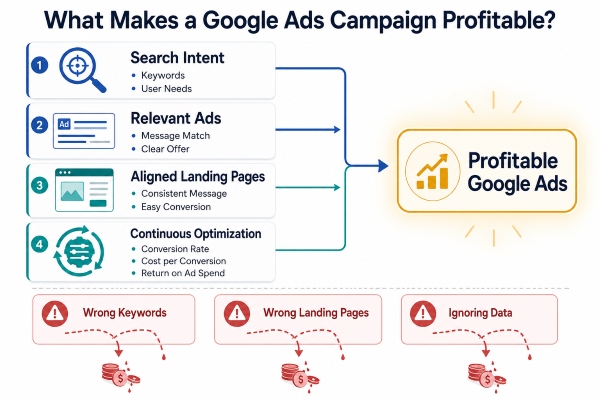
Many businesses struggle with Google Ads due to avoidable mistakes. Focusing on high-volume keywords without considering intent often leads to poor performance. Relevance matters more than traffic volume. Strategic keyword selection improves efficiency.
Driving traffic to generic or poorly designed pages reduces conversion rates. Ads and landing pages must align in message and purpose. Alignment improves user experience and results.
Google Ads requires ongoing optimization. Ignoring performance data leads to stagnation and wasted budget. Continuous improvement is essential.
- Choosing the Wrong Keywords
- Sending Traffic to the Wrong Pages
- Ignoring Data and Optimization
When to Work with a Digital or Performance Marketer freelance?
An experienced person helps align Google Ads with business goals, funnels, and data systems. This expertise reduces trial and error and accelerates growth. Professional guidance is especially valuable for scaling efforts. You can fill out a form in my google ads services page.
Final Thoughts
Google Ads in digital marketing is one of the most powerful tools when used strategically. Its ability to connect intent with measurable outcomes makes it a valuable growth channel for many businesses. However, success depends on clear goals, thoughtful execution, and continuous optimization. When integrated into a performance-focused digital strategy, Google Ads becomes more than an advertising platform—it becomes a driver of sustainable growth.